
Walk into a tackle shop as a beginner and the wall of rods, reels, and line makes it look like fishing starts with a big, careful purchase.
It does not. Most of that wall is built for people chasing specific fish in specific water, and almost none of it decides whether you catch your first one.
Your first kit comes down to three real decisions: which rod and reel, which few terminal items, and what to skip. Get those right and the rest can wait until you know what you like to fish for.
This is the decision guide, not a catalog. It walks the choices in the order you face them at the counter.
First Decision: Rod and Reel
The rod-and-reel choice is the one beginners overthink most, and also the easiest to get right.
You are not ordering a custom blank built for one species. For a first setup, a medium spinning combo around six to seven feet covers almost everything a beginner does from a pond, a bank, or a pier.

A few things drive the price, and most do not matter yet:
- Length. Six to seven feet casts well from shore. Longer rods help on big open water you are not fishing yet.
- Material. Graphite is lighter and more sensitive, fiberglass is cheaper and tougher. A beginner notices neither at first.
- Action and power. These describe how stiff the rod is and what size fish it suits. A medium rod sits in the helpful middle.
The reel choice is simpler than the jargon suggests. A spinning reel or a closed-face spincast reel suits a beginner, because both resist the tangles an open-faced baitcaster throws at a new caster. A baitcaster is a thing to grow into, not start on.
Prices run from about twenty dollars to many hundreds, and a low-cost combo lands a bluegill or small bass exactly as well as an expensive one. Learning on it tells you what you want before you spend real money.
A note for the very budget-minded. Many bank anglers still start with a cane pole, a long pole with the line tied straight to the tip and no reel at all. It is cheap, simple, and catches panfish near shore without a tangle.
Second Decision: The Few Terminal Items
Past the rod and reel, beginners imagine they need a loaded tackle box. They do not.
The handful of small items that connects your line to a fish is short, cheap, and the same across most beginner trips.
- Hooks. Size 6 to 8 baitholder hooks suit worms and the small fish you are most likely to catch first.
- Split-shot weights. A few pinch-on weights to get bait down. A dollar’s worth lasts a season.
- A bobber. It suspends the bait and shows the bite by disappearing underwater.
- Bait. A tub of nightcrawlers from a gas station near the water out-fishes most lures for a beginner.
That short list builds the one rig that is hardest to get wrong, which is the same starting point covered in the start-here guide to catching your first fish. Lures, leaders, and a divided tackle box are real later, but they are not what a first fish is waiting on.
The Line Already on the Reel
Line is where beginners spend money they do not need to, because the reel usually comes spooled.
Whatever line is already on a beginner combo is fine to learn on, and six to ten pound test handles most pond and pier fish. You match line strength to the fish: light line for small fish, heavier line only when you are after something that can break it.
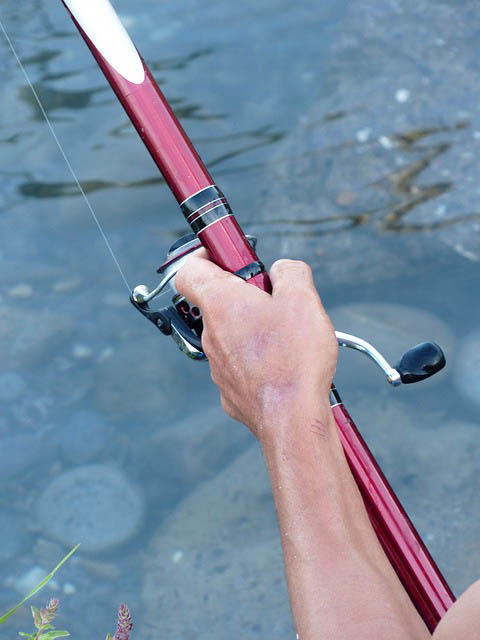
The strength number, measured in pounds, is the main thing to read. The differences between monofilament, fluorocarbon, and braid matter more once you fish on purpose for a species, and what each line type does well is broken down in the guide to fishing line types and their strengths.
When you do respool, thread the new line through the rod guides, tie it to the spool, and reel it on under light tension until the spool is nearly full.
What to Skip on a First Trip
The fastest way to overspend is buying for the fishing you imagine instead of the fishing you are about to do.
Most of the catalog is optional for a beginner, and a lot of it stays optional for years.
- A fish finder. Useful on big water from a boat, useless for a pond from the bank.
- A second or specialized rod. One medium combo covers nearly every beginner situation.
- A wall of lures. They mostly sit in a drawer while live bait does the work.
- Custom or premium gear. It will not land a first fish any better than a cheap combo.
Buying less is not a compromise here. It keeps the first few trips about learning the water rather than managing equipment.
When the Gear List Gets Longer
There is one situation where the kit genuinely grows.
Fishing from a boat adds safety and comfort gear that bank fishing does not need.
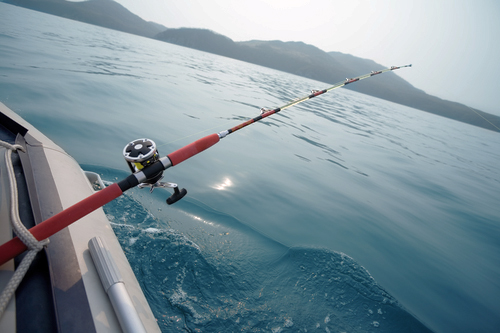
That means a properly fitted life jacket for each person, a cooler, a landing net, and clothing that keeps you dry and warm in cold weather. A waterproof case and a backup battery for a phone are sensible too.
Shore fishing skips almost all of it. A great deal of US fishing happens from a pier or a bank with a borrowed rod and a tub of worms, and that includes plenty of productive pier fishing in California.
One box applies everywhere, boat or bank. Check whether the water you are fishing requires a license, since the rules vary by state and by the type of fishing you are doing.
The short version: one medium combo, a few terminal items, the line that came on the reel, and a license. Catch a first fish on that, and you will know far better what gear is worth buying next.