
The thing stopping most people from catching their first fish is not skill. It is the worry that they have to buy a pile of gear first, learn it all, and not look foolish at the water.
None of that is true.
You can start sport fishing with borrowed or low-cost gear; the first fish needs no big purchase. A rod someone lends you, a packet of hooks, and a worm will catch a fish in a local pond. The expensive part of fishing is optional, and it comes much later than the gear aisle wants you to believe.
This is the start-here guide. It walks through what you actually need for one fish, where to go to make it likely, the single rig that is hardest to get wrong, and the small handful of rules that keep the day legal and safe.
What You Actually Need to Catch One Fish
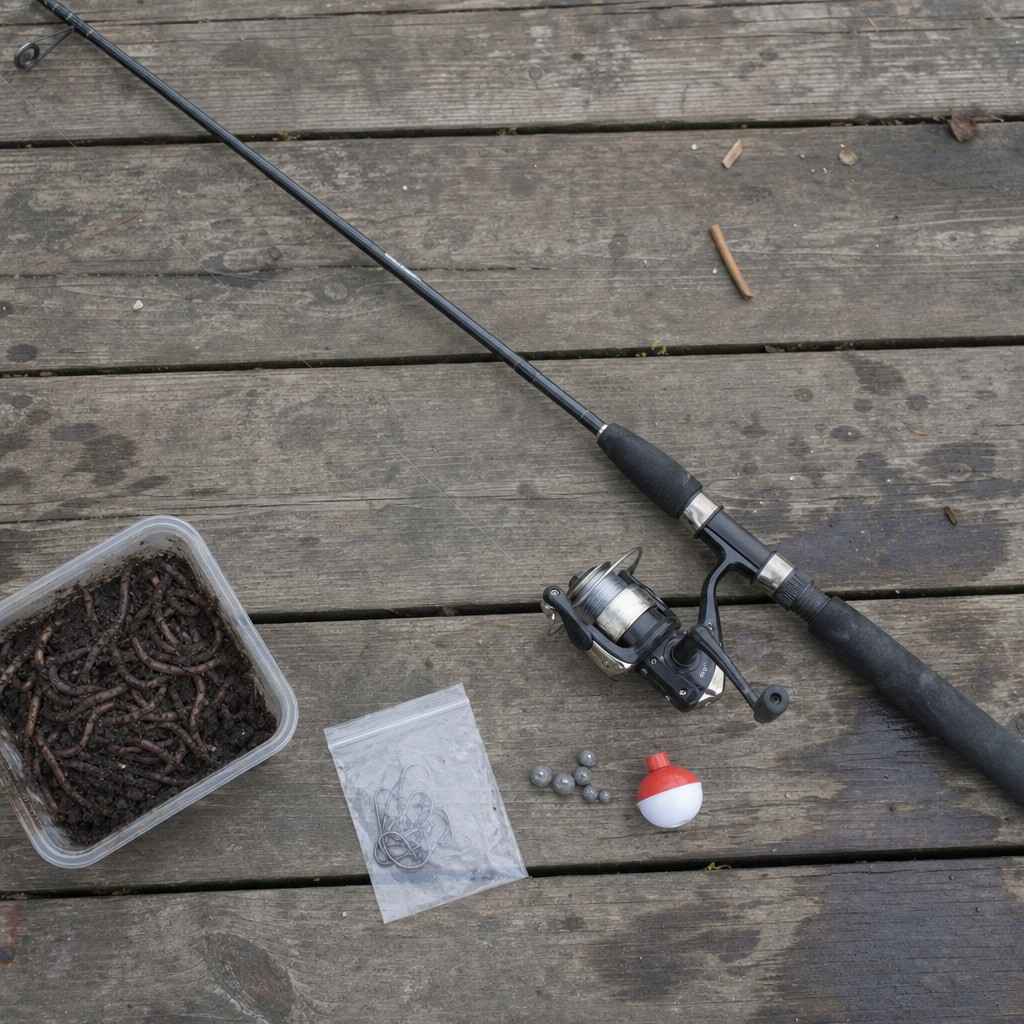
Borrow before you buy. Most people who fish own a spare rod and will happily lend it, and many tackle shops and some state parks loan gear for free.
A starter setup is short:
- A rod and reel. A medium spinning combo around six to seven feet. One borrowed outfit covers nearly every beginner situation.
- Line already on the reel. Whatever is spooled is fine to learn on. Six to ten pound test handles most pond and pier fish.
- A few hooks. Size 6 to 8 baitholder hooks suit worms and the small fish you are most likely to catch first.
- A couple of split-shot weights and a bobber. A dollar’s worth of each.
- Bait. A tub of nightcrawlers from a gas station near the water.
That is the whole list for a first fish. Notice what is not on it: a tackle box of lures, a fish finder, waders, a second rod.
The expensive part of fishing is optional, and it comes much later than the gear aisle wants you to believe.
If you do buy one thing, make it a low-cost beginner spinning combo rather than a cheap lure assortment. The combo is the part you will keep using; the gimmick lures mostly sit in a drawer.
A quick honesty note on cheap gear. The bargain-bin combo will not cast as smoothly or last as long as a mid-range one, and that is fine. It will land a bluegill or a small bass exactly as well, and learning on it tells you what you actually want before you spend real money.
Where to Go for a Likely First Fish
Here is the part that matters more than any piece of tackle. Reading the water beats expensive tackle; most blanks come from fishing where there are no fish.
A first trip is not the time to test that skill on a big, featureless lake. Pick water that does the work for you.
Small ponds are the easiest place to catch a first fish. Neighborhood ponds, park ponds, and farm ponds are usually full of bluegill and small bass that bite freely and are not picky. The fish are close to shore and easy to reach without a boat.
Other beginner-friendly options:
- A public fishing pier. Structure concentrates fish, the casting is forgiving, and you are fishing from a stable platform.
- A stocked lake or community fishing program. Many state fish and wildlife agencies stock urban waters specifically so beginners catch something; their websites list stocked spots.
- A slow stretch of a small creek, fishing the calm pockets behind rocks and logs where fish rest out of the current.
Wherever you go, fish the edges of something. Fish hold near cover and structure, not out in open water, so cast near a dock piling, a weed bed, an overhanging tree, or a drop-off. Learning to spot those holding areas is the single skill that pays off fastest, and it is worth reading more on how to find fish by reading the water once you have a first trip behind you.
Timing helps too. Fish feed hardest at dawn, dusk, and during changing conditions, so an early morning or the last hour of light will out-fish the middle of a bright afternoon.
The Simple Rig That Is Hard to Mess Up
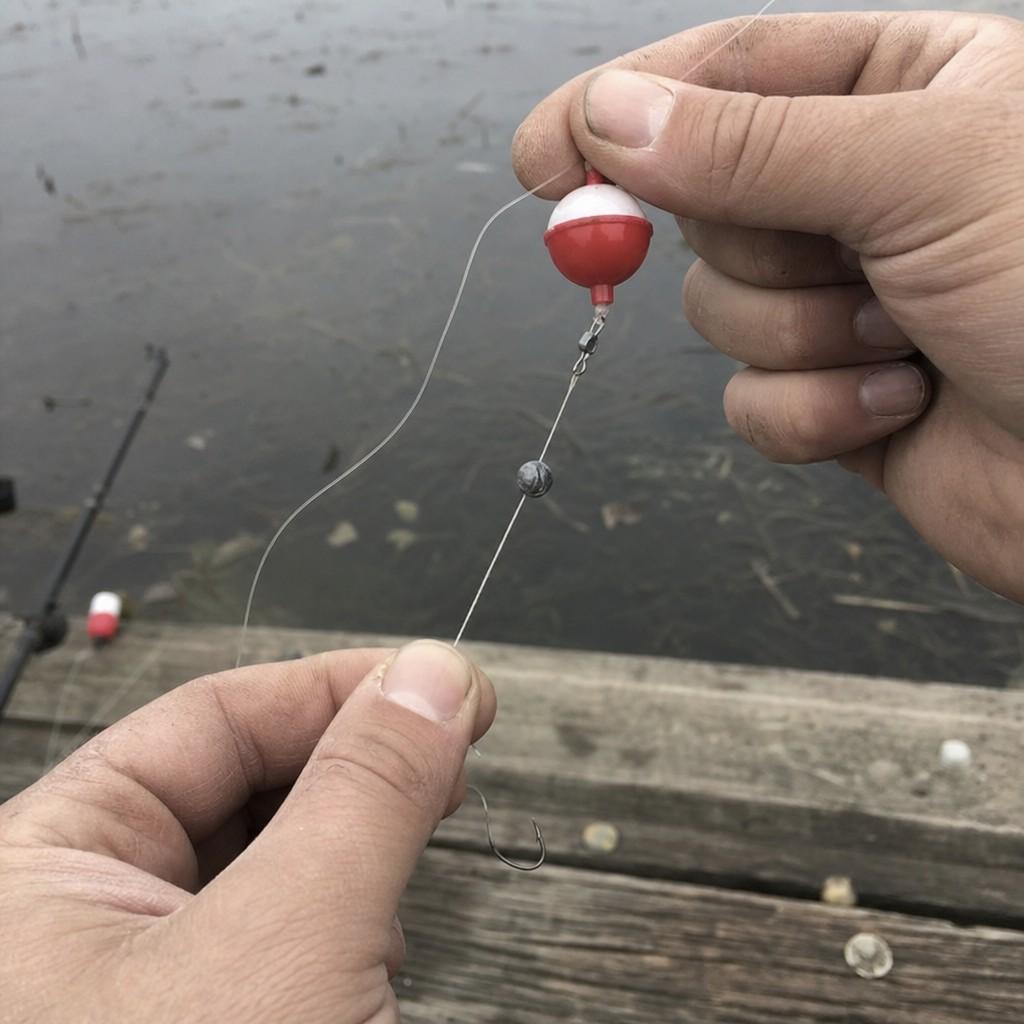
A first rig should be forgiving, cheap, and obvious when a fish bites. A basic bobber rig is all three, which is exactly why it is the right place to start.
Why it works: the bobber suspends your bait at a set depth where panfish cruise, and it disappears underwater when a fish takes the bait. You do not have to feel a subtle bite through the line. You watch a float and react when it goes under.
To set it up:
- Tie the hook to the end of your line. A clinch knot or the knots beginners actually need will hold fine for pond fish.
- Pinch one or two split shots onto the line about a foot above the hook.
- Clip the bobber on a foot or two above the weights, so the bait hangs near the bottom in shallow water.
- Thread on half a worm. A whole nightcrawler is bigger than a bluegill’s mouth, so a smaller piece gets more bites.
Cast it gently near cover, let it settle, and watch the float.
A simple, well-tied rig you trust out-fishes a complicated one you don’t. The bobber setup will not impress anyone at the tackle shop, and it will catch you more first fish than almost anything else.
When you tie that hook on, wet the line first. Friction from a dry knot weakens it, and a wet knot seats tighter and holds better.
What to Do When One Bites
This is the moment beginners brace for, so here is the calm version.
When the bobber goes under, do not yank. Lift the rod tip smoothly until you feel the weight of the fish, then keep steady pressure and reel slowly. A small fish does not need force; a hard jerk usually pulls the hook out of its mouth.
Once it is in:
- Wet your hands before touching the fish. Dry hands strip the protective slime coat that guards it against infection, which matters if you plan to release it.
- Watch for spines. Bluegill and other sunfish have sharp dorsal spines, and catfish have stiff pectoral and dorsal spines that can jab you. Hold the fish with the spines folded flat, not against your palm.
- Back the hook out the way it went in. Needle-nose pliers make this easier and keep your fingers clear of the hook and the fish’s teeth.
If you are keeping it, do that quickly and humanely. If you are releasing it, support the fish in the water until it swims off on its own rather than dropping it from height.
Handling the first one is the part that feels uncertain and turns out to be the easiest to learn. After a couple of fish it stops being a thought at all.
Licenses and a Few Honest Rules
Before any of this, one practical box to tick. Fishing licenses and local rules vary by state, so check your state agency before you go.
There is no single national fishing license in the United States. Each state runs its own system, sets its own prices, and decides who needs one. Most adults do need a license to fish public water, and many states sell a short-term or one-day license online in a few minutes for the cost of a sandwich.
A few things that commonly vary by state, and that are worth a thirty-second check on your state fish and wildlife agency’s website:
- Who needs a license. Children under a certain age often fish free, and some states hold free fishing days where no license is required at all.
- What you can keep. Size and bag limits protect the fishery; they tell you how many of a species you may keep and how big they must be.
- Where you can fish. Some waters are private, seasonal, or catch-and-release only.
This is not legal advice, and the rules genuinely do change, so treat your state agency’s page as the source of truth rather than anything you read second-hand. The good part is that the agencies want you fishing legally and make the information easy to find.
None of this should make a first trip feel heavy. A license, a borrowed rod, a bobber, and a pond near home is a complete plan. Catch one small fish, and the rest of the sport opens up at whatever pace you like.