
You’ve probably noticed that fish aren’t scattered randomly throughout a lake or river. They congregate in specific spots where conditions favor their survival and feeding.
Rocky outcrops, submerged vegetation, and sharp drop-offs create natural ambush zones. Water temperature shifts and clarity changes matter too. So does tracking where baitfish congregate.
But here’s what most anglers miss: understanding how these factors shift with the seasons changes everything about where you should cast.
Where Fish Hide: Reading Structure for Location
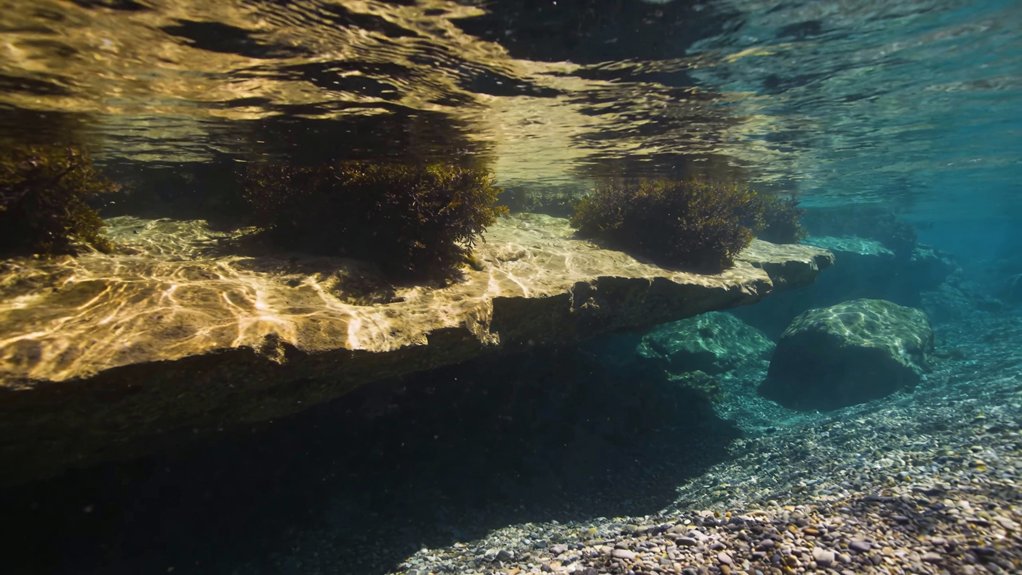
Since fish need places to hide and hunt, you’ll want to focus on structure.
Rocky structures and drop-offs are prime real estate where bass ambush prey. Look for submerged vegetation; it attracts baitfish and gives predators cover.
Rocky structures and drop-offs are bass ambush zones. Submerged vegetation attracts baitfish and provides predators essential cover.
Don’t overlook logs, rock piles, and weed beds either. In rivers, eddies behind obstructions create slack water where fish rest without fighting currents.
Docks provide overhead shelter that panfish love. Observe your water carefully.
Clear conditions demand subtle presentations near cover, while murky water lets you fish bolder near structures.
Understanding spot selection principles will help you identify these productive areas more efficiently across different water conditions.
Master reading structure, and you’ll consistently find fish.
Spot Fish With Surface Activity and Bird Behavior
Three key signs’ll tell you where fish are feeding right now: surface disturbances, bird activity, and water conditions.
Watch for surface swirls and wakes that reveal actively feeding fish just below.
Bird diving directly into water pinpoints baitfish schools and hungry predators underneath. Oily slicks on the surface mean high baitfish activity, cast there confidently.
Wind creates choppy water that triggers aggressive feeding.
Calm, glassy conditions make fish more cautious and selective.
Learn local bird species and their targeting habits. Certain birds chase specific bait types, revealing what’s actually happening underwater.
You’ll catch more fish by reading these natural indicators instead of guessing.
Why Temperature and Clarity Refine Your Search
Water temperature and clarity work together to narrow down where fish’ll actually be feeding. Temperature effects directly control fish metabolism: cooler water energizes them, while warmer water slows their activity.
You’ll need clarity adjustments too. Clear water makes fish cautious, so use subtle baits and finesse presentations. Murky conditions let you get aggressive with lures.
Lake Tahoe shows this perfectly: temperature varies dramatically with depth and season, shifting which species stay active where. Monitor both conditions before heading out.
Understanding how temperature and clarity interact helps you identify ideal feeding zones and refine your entire search strategy efficiently.
Track Baitfish to Find Feeding Fish
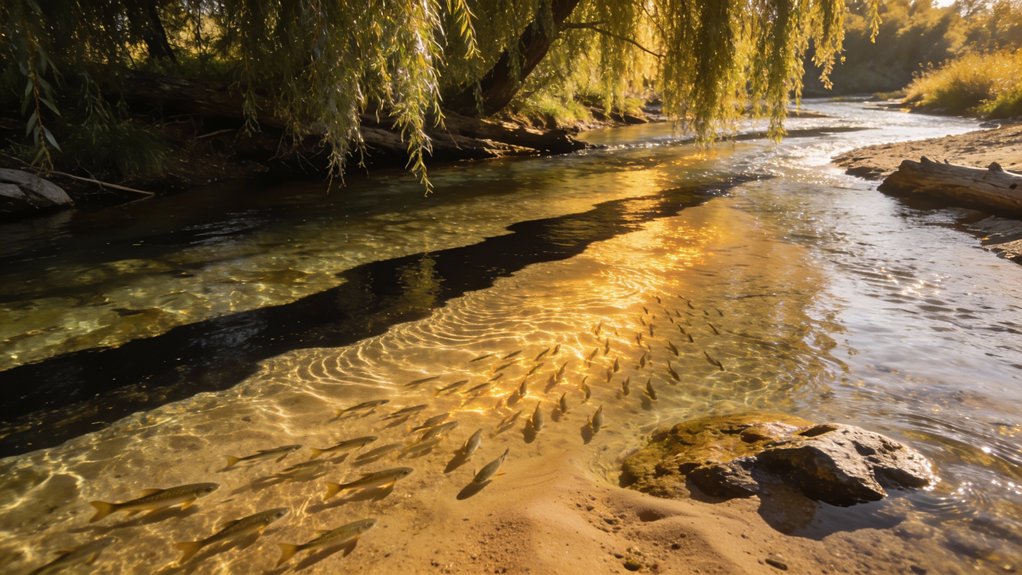
Predatory fish don’t just hang around randomly; they follow the food.
You’ve got to track baitfish migration patterns to find where feeding happens.
Watch for jumping baitfish and diving birds; they’re your free locators.
Wind pushes baitfish toward one shore, so fish the downwind side.
Structures like weed beds and drop-offs concentrate baitfish, and predators know it.
Water currents move these schools predictably, so position yourself ahead of the flow.
Use sonar if you’ve got it to spot schools directly.
Once you locate the baitfish, the bigger fish aren’t far behind.
That’s your advantage.
Shift Your Targets Seasonally: Spring Through Winter
As temperatures shift throughout the year, so do your fish.
Spring strategies mean targeting shallow waters where invertebrates emerge and fish feed actively.
Summer requires patience: fish dive deep during midday heat, so fish early morning and late evening instead.
Fall demands focus on remaining cover around dying vegetation where fish concentrate.
Winter tactics involve going deep where oxygen levels stay adequate.
Use larger lures or jumbo minnows when water chills.
You’ll notice water temperature and clarity change constantly, so monitor conditions regularly.
Adjust your approach each season, and you’ll consistently locate feeding fish throughout the year.