
The bank is where most US anglers start, and almost none of them owned the gear they used the first time.
A borrowed rod, a few hooks, and a pond within driving distance is a complete plan. The shore does the hard part for you, because fish hold close to it.
You can start sport fishing with borrowed or low-cost gear; the first fish needs no big purchase. Bank fishing is the proof. You stand on solid ground, cast a short distance, and let timing and location carry the trip rather than expensive tackle. If you are still weighing whether to fish from a pier, the bank, or a boat, the guide on picking the right spot matters just as much as picking gear.
What to Borrow Before You Buy Anything
Most people who fish own a spare rod and will lend it. Many tackle shops and some state parks loan beginner gear for free, so ask before you spend.
A first bank setup is short:
- A rod and reel you borrow. A medium spinning combo around six to seven feet covers nearly every beginner spot from shore.
- Whatever line is already spooled. Six to ten pound test handles most pond and creek fish you will catch first.
- A few small hooks, split shot, and a bobber. A dollar’s worth of each, easy to share from someone else’s box.
- Bait from near the water. A tub of nightcrawlers from a gas station is enough.
That is the whole list. A boat, a fish finder, and a tackle box of lures are all things to skip on a first trip. The start-here guide to a first fish walks through the simple bobber rig in more detail.
Timing Does More Work Than Gear
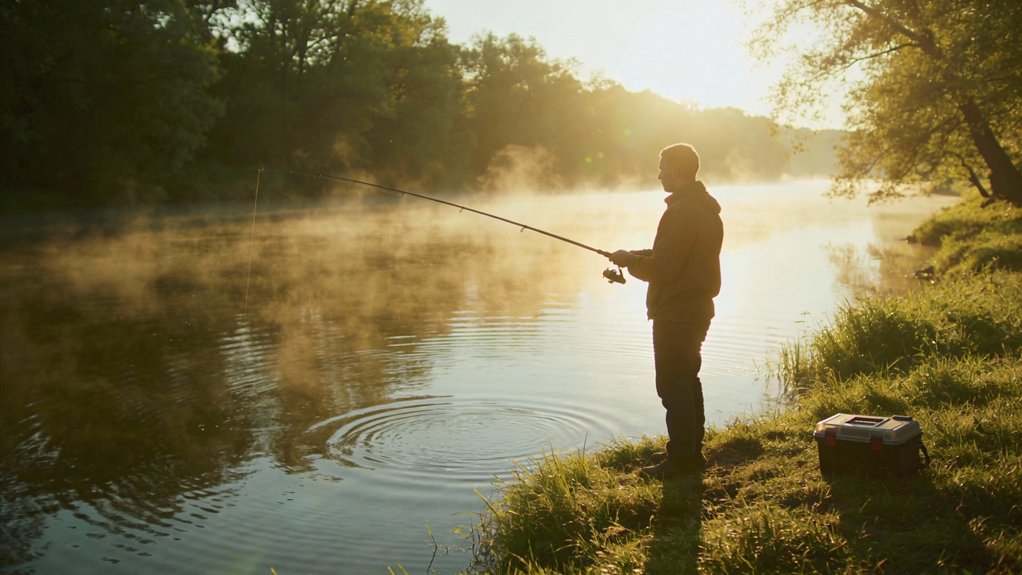
Here is the part that beats any rod on the wall. Fish feed hardest at dawn, dusk, and during changing conditions, and the bank is at its best in those windows.
In low light, fish move closer to shore and bite more freely, which is exactly the water a bank angler can reach. The hour after sunrise and the last hour of light will out-fish a bright midday by a wide margin, and the slow days at dawn and dusk are rarely the problem.
Spring and fall help too. Milder water pulls fish into the shallows near banks, and an overcast sky keeps them roaming closer to shore than a clear afternoon does.
Where to Stand for a Likely First Fish
Reading the water beats expensive tackle; most blanks come from fishing where there are no fish. From the bank, that skill is mostly about reaching the right edge.
Start with a local pond. They are easy to get to and loaded with bluegill and small bass that bite without much fuss. From there, a few features concentrate fish where you can reach them:
- Spillways and dam outflows, where current funnels fish into a tight zone.
- Bridges and docks, which give shade, cover, and slightly deeper water.
- Slow stretches of a small creek, fishing the calm pockets behind rocks and logs.
Prioritize clear, walkable banks over difficult terrain, because you learn faster when you are not fighting the ground. Spotting water features and structure is the single skill that pays off fastest from shore.
Cast Short, Stay Quiet, and Fish Smart
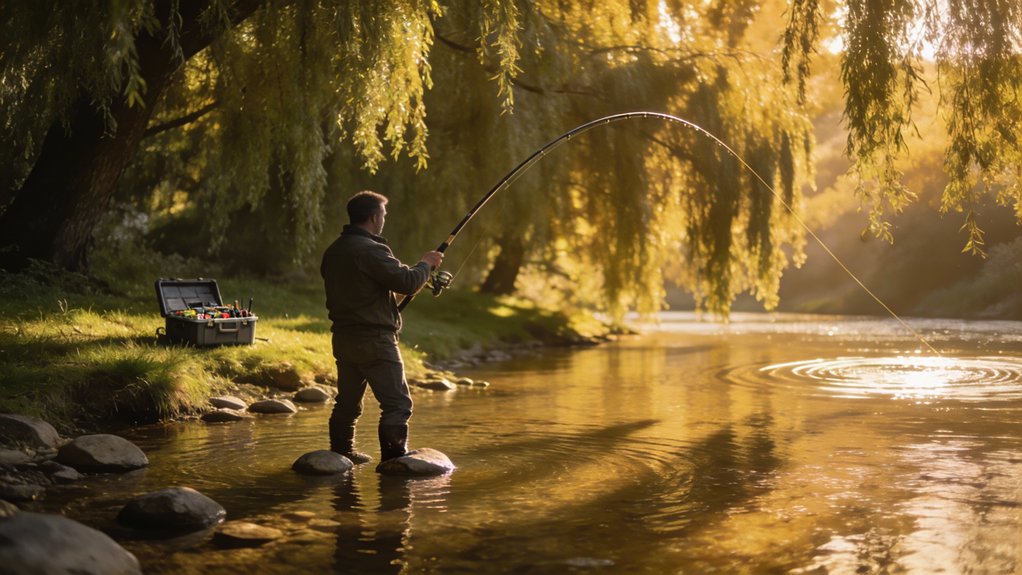
Bank casting rewards control, not distance. A smooth overhead cast covers most situations, and keeping it quiet stops you spooking fish that are sitting close in.
Casting parallel to the shoreline keeps your bait in the strike zone longer, since the fish are cruising that edge rather than the open middle. Bluegill, bass, and crappie in local ponds are the forgiving species to aim for first.
A few honest safety notes before you go. Wear a life jacket near deeper or fast water, keep your footing on a steep bank, and move quietly along the shore. Fishing licenses and local rules vary by state, so check your state agency before you go, and the rundown on licenses and size limits covers what to confirm.
None of this should make a first trip feel heavy. A borrowed rod, a bobber, and a pond near home is everything you need to catch one fish from the bank.