
Fish are not spread evenly across a lake or river. They sit in a small fraction of the water, in spots that give them food, cover, and comfortable conditions.
Reading the water beats expensive tackle; most blanks come from fishing where there are no fish. The skill that fills a stringer is not a better lure. It is learning to look at a piece of water and tell where fish are holding before the first cast.
This guide covers the five things that decide that: structure, current, depth, edges, and cover. Read them in order and you stop fishing dead water by accident.
Structure: The Map Under the Surface
Structure is anything that breaks up an otherwise plain bottom, and it is the first thing to find.
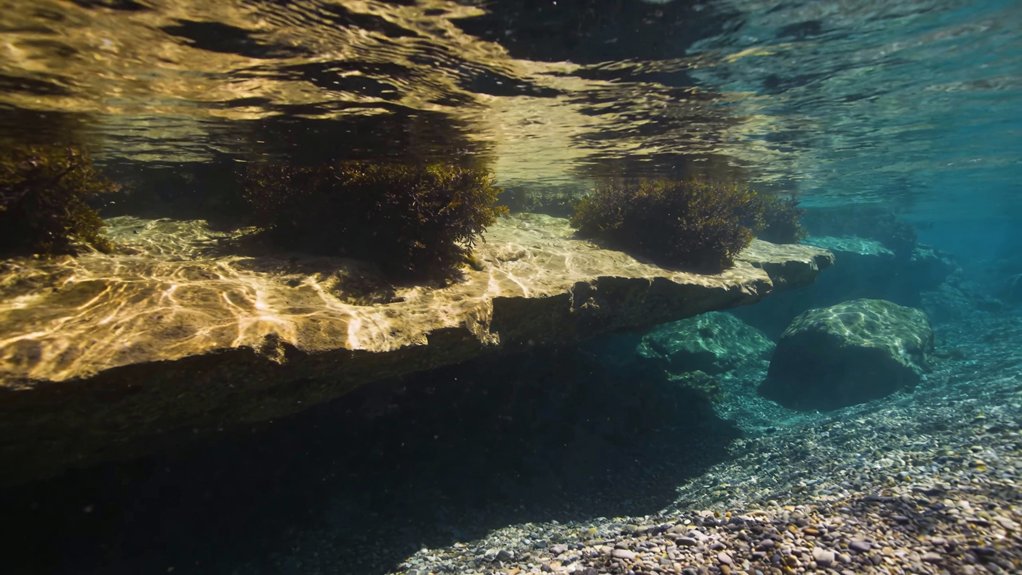
Rock piles, drop-offs, points, submerged logs, and weed beds all do the same job. They concentrate fish in a featureless lake or pond.
Why it works:
- Cover hides ambush predators. Bass and other game fish sit tight to a rock pile or weed edge and wait for prey to pass.
- Structure holds the food chain. Weed beds and rocky bottom grow the insects and baitfish that everything larger eats.
- A drop-off is a highway. Fish travel the line where shallow falls into deep, moving up to feed and back down to rest.
A bare, flat bottom holds few fish. Find the structure first and you have found the most likely water.
Current: Let the Water Do the Work
In moving water, current decides where fish sit, because holding in fast flow burns energy they would rather spend feeding.
Fish face into the current and wait in the slack water beside it. The flow carries food to them while they rest out of the main push.
Look for the seams where fast and slow water meet:
- Eddies behind boulders, bridge pilings, and fallen trees
- The calm pocket on the downstream side of any obstruction
- The slower inside bend of a river, where current eases
On a still lake, wind does the same job. It pushes baitfish toward one shore, so the windblown bank often fishes better than the calm one.
Depth and Temperature: Where the Comfortable Water Is
Depth matters because water temperature changes with it, and temperature controls how active fish are.
Cooler water carries more oxygen and tends to hold active fish, while fish slow down and sit deep in summer heat. According to NOAA Fisheries, most species have a preferred temperature band they return to whenever they can.
The practical version is simple:
- Summer midday: fish go deep or tuck under cover. Work early morning and last light instead.
- Spring and fall: shallows warm and cool gradually, pulling feeding fish close to shore.
- Cold water: fish move slow and deep, so slow your presentation to match.
On a deep, clear lake the comfortable layer can sit well below the surface, and that is where the fish will be.
Edges and Cover: The Sharpest Spots
The highest-percentage water of all is an edge, the line where one thing changes into another.
Fish hold on edges because an edge gives cover on one side and feeding water on the other. The more abrupt the change, the more it concentrates fish.
The edges worth a cast first:
- A weed line where vegetation stops and open water begins
- A drop-off from shallow to deep
- A mud line where clear water meets stirred-up murky water
- Shade lines under docks, overhanging trees, and bridges
Water clarity tells you how close to fish you can get. Clear water makes fish wary, so cast farther from cover and use a subtle presentation. Murky water lets you fish bolder and closer in.
Reading the Surface Before You Cast
Before any of the above, spend a minute just watching, because the water often shows its hand.
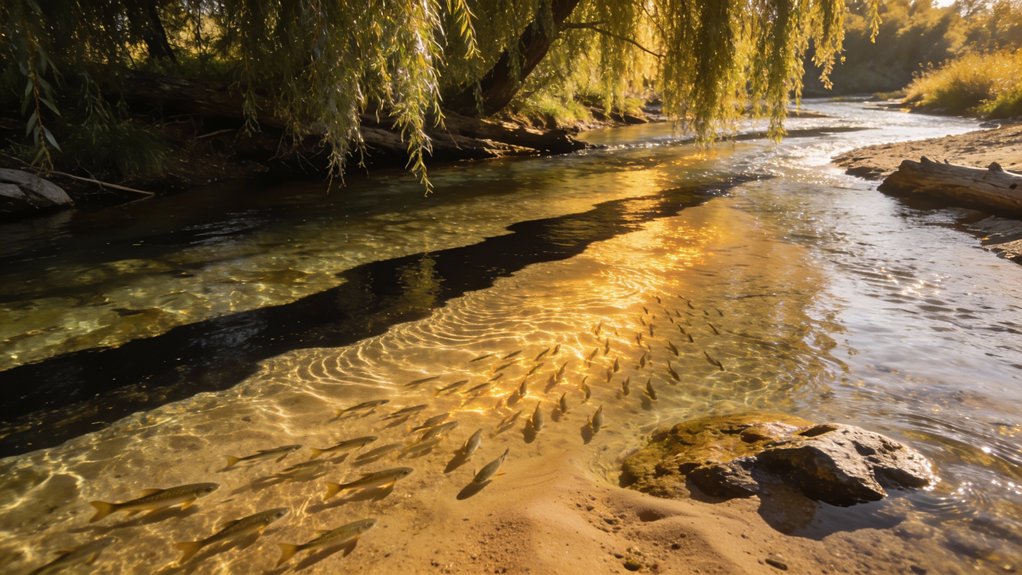
Surface swirls and small wakes mean fish are feeding right there. Baitfish flicking at the top, or birds diving on a single spot, point straight to a school with predators underneath.
A short watch beats blind casting. If you still draw blanks after reading the water, the problem is usually timing or conditions rather than the spot, which is the subject of why fish are not biting on a given day.
Put the five together and you can walk up to new water and make a sensible first cast. If you are still sorting out gear, the start-here guide to catching your first fish covers that side, and these same skills carry into bank fishing for beginners and onto the ice once you know how to check ice before going deep in winter.