
they’re not actually magic, but you’ll swear they are once you hit the water. Between sunrise and 9 a.m., then again from an hour before sunset until dark, fish become aggressive hunters.
You’ve got low light working in your favor, calmer conditions, and feeding fish that’ll hit your poppers hard.
But there’s a catch worth knowing.
Why Fish Bite Hardest at Dawn and Dusk
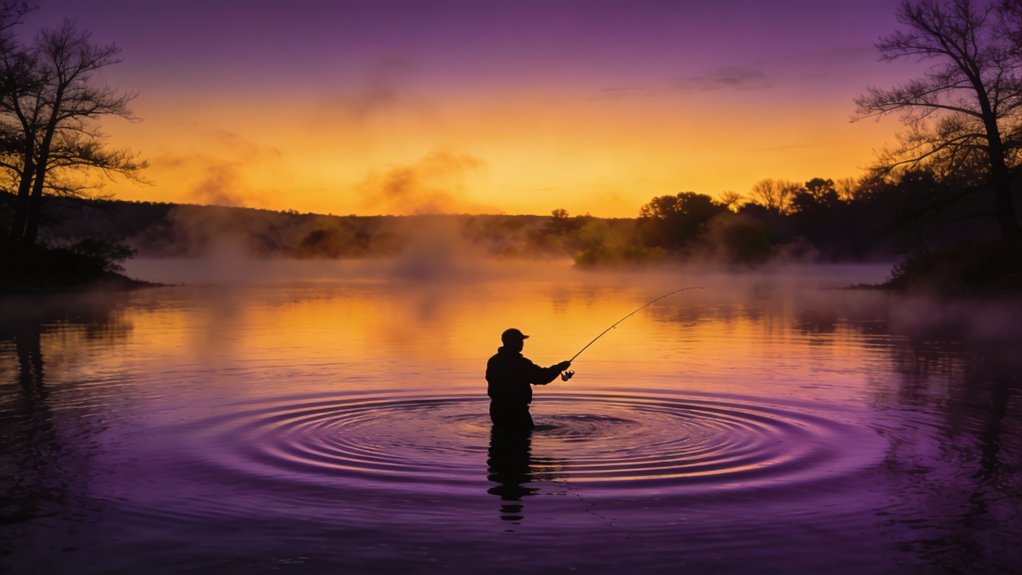
Because light levels drop during dawn and dusk, fish become particularly more active during these changing hours.
Light drops at dawn and dusk, triggering heightened fish activity during these critical transitional hours.
You’ll find that low-light conditions trigger aggressive feeding behavior in most species.
Fish feel safer venturing out when predator presence becomes harder to detect. They capitalize on dim lighting to hunt more effectively and consume food without constant threat awareness.
The hour before sunrise and hour after sunset, what we call “magic hours,” offer you peak opportunities.
During these windows, both predatory and prey fish feed more intensely.
You’re fundamentally working with fish that’ve abandoned their daytime caution and are ready to strike.
Essential Gear and Preparation for Early Morning Sessions
When you’re heading out before sunrise, you’ll need to dress strategically for the cold. Layered clothing traps warmth while letting you adjust as temperatures rise.
Quality long-sleeve shirts block UV rays during twilight hours. Moisture-wicking fabrics keep you dry and comfortable throughout your session.
Essential gear you’ll want:
- Layered clothing for temperature control
- High-quality long-sleeve fishing shirt for sun protection
- Moisture-wicking base layers
- Compact surf bag for tackle and essentials
- Reliable headlamp for pre-dawn setup
Pack your compact surf bag the night before. A headlamp lets you navigate safely and rig tackle in darkness.
These preparations eliminate excuses and maximize your freedom to fish whenever conditions favor success.
Evening Fishing: Timing, Techniques, and When to Stay After Dark
Evening fishing demands a different approach than those pre-dawn sessions you’ve been perfecting. Your evening techniques shift toward surface poppers and metal jigs as light fades. The “power hour” before sunset brings aggressive fish activity.
However, don’t overlook post sunset strategies: striped bass hunt actively in low-light conditions. UV radiation still reaches 60-75% of peak intensity, so protect yourself accordingly.
Temperatures drop quickly after dark, requiring warming layers. Stay visible and safe with appropriate gear if you fish past sunset.
These evening approaches maximize your catch while keeping you comfortable and protected throughout twilight hours.
Sun Safety During Extended Twilight Sessions
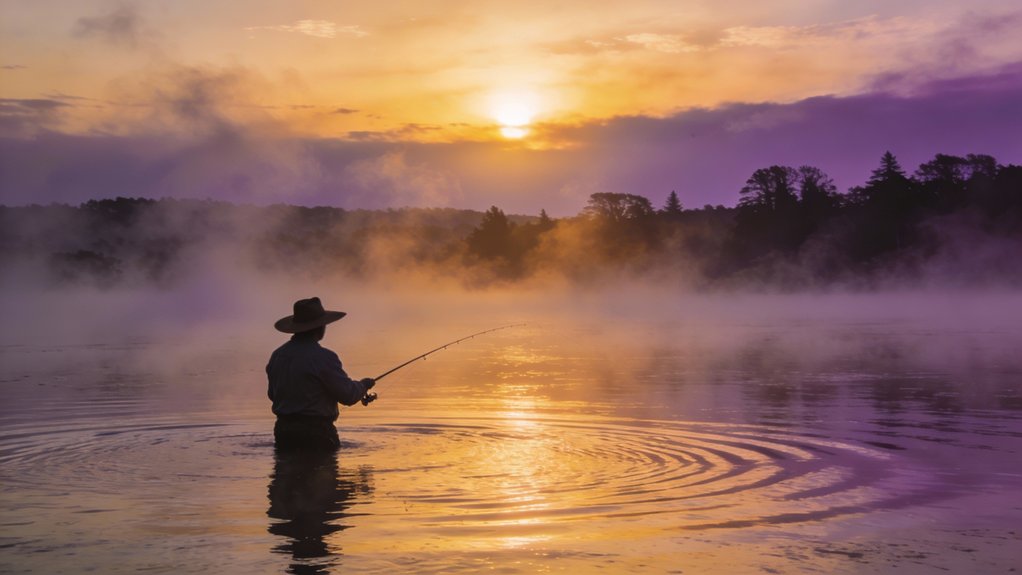
Sun Safety During Extended Twilight Sessions
Many anglers skip sunscreen during dawn and dusk fishing, thinking the lower light means they’re safe from UV damage.
That’s a dangerous mistake. UV radiation still reaches 40-75% of peak midday intensity during twilight hours.
Water reflects up to 80% of UV rays, amplifying your exposure considerably. You’re building cumulative skin damage with every unprotected session.
Your UV protection strategies:
- Apply SPF 50+ sunscreen before heading out
- Wear UPF-rated clothing for maximum coverage
- Reapply sunscreen every two hours
- Use sunglasses with UV protection
- Check seasonal twilight lengths in your region
Skin health awareness means protecting yourself consistently, regardless of time or conditions.
How Seasons Change Your Best Dawn and Dusk Windows
Your twilight fishing schedule isn’t set in stone; it shifts dramatically as seasons change.
Spring demands flexibility. Hit mid-morning and dusk early on, then switch to early morning and dusk as activity peaks.
Summer rewards you with prime dawn fishing from sunrise through two hours after, plus late afternoon sessions.
Autumn’s aggressive feeding means early morning and late afternoon work best.
Winter slows everything down, so fish mid-morning and late afternoon when sluggish fish finally stir.
You’ll catch more by tracking seasonal patterns and adjusting to how fish behavior evolves throughout the year. Stay adaptable. Remember to pay attention to the environment and watch for environmental clues like water splashes and bird activity that indicate seasonal feeding patterns.
Water and Weather Signals That Kill Your Dawn and Dusk Bite
When conditions shift suddenly, your best fishing hours can turn completely dead.
You’ll want to watch for these game-changing signals:
- Temperature fluctuations drop feeding activity fast
- Water turbidity from rain blocks fish visibility
- Wind conditions disrupt bait movement and location
- Surface debris and algae push fish deeper
- Pressure changes trigger fish to seek shelter
Recent rains cloud the water, making low-light feeding nearly impossible.
Cloudy water from recent rains eliminates low-light feeding opportunities, forcing you to adjust your fishing strategy.
High winds mess with your bait presentation during dawn and dusk.
Sudden temperature swings shut down feeding windows you’ve counted on.
Algae blooms and floating debris force fish away from productive zones.
Storm systems dropping barometric pressure send fish into hiding mode instantly.
Your Pre-Dawn and Dusk Fishing Checklist
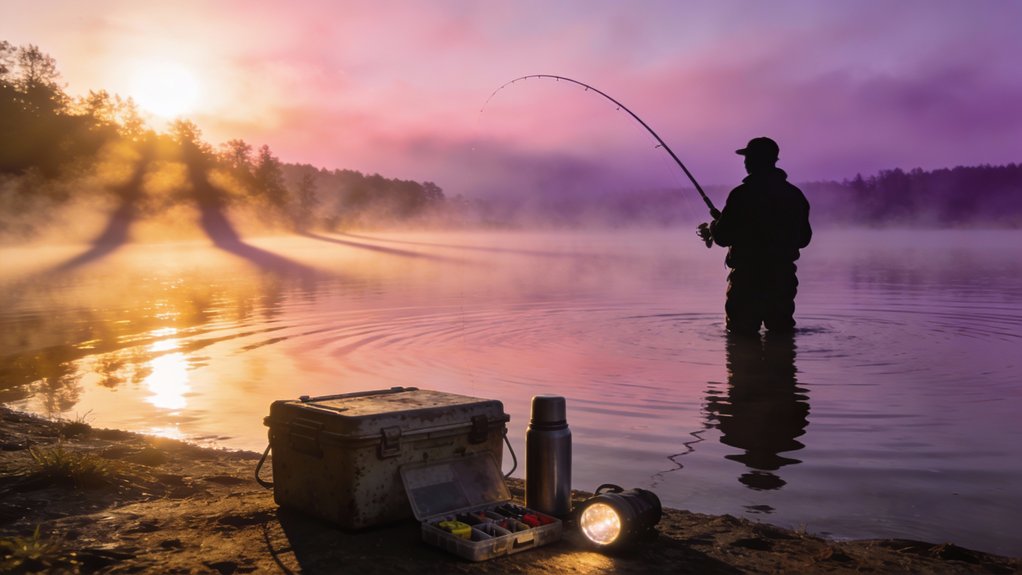
Three critical things’ll make or break your pre-dawn and dusk trips: sun protection, visibility gear, and comfort basics.
For pre-dawn preparation, pack UPF 50+ fishing shirts blocking 98% of UV radiation.
Apply SPF 50+ water-resistant sunscreen on exposed skin; twilight UV levels hit 40-75% of peak intensity.
Grab a headlamp for traversing dim conditions and applying sunscreen safely.
Your dusk tactics require a compact surf bag with essential gear and a small light for low visibility.
Bring plenty of water and dress for temperature swings.
These fundamentals keep you protected, visible, and comfortable during magic hours.