
Do you need a fishing license to fish in the United States?
The honest answer is that it depends on where you are standing. There is no single national license to point to.
Fishing licenses and local rules vary by state, so check your state agency before you go. That one sentence is the whole story in miniature.
The detail underneath it is what most beginner guides skip, and it is the part that keeps your day legal. This piece walks through it: why there is no federal license, who usually fishes without one, how saltwater differs, and how to buy the right license online.
The Short Answer: There Is No National Fishing License
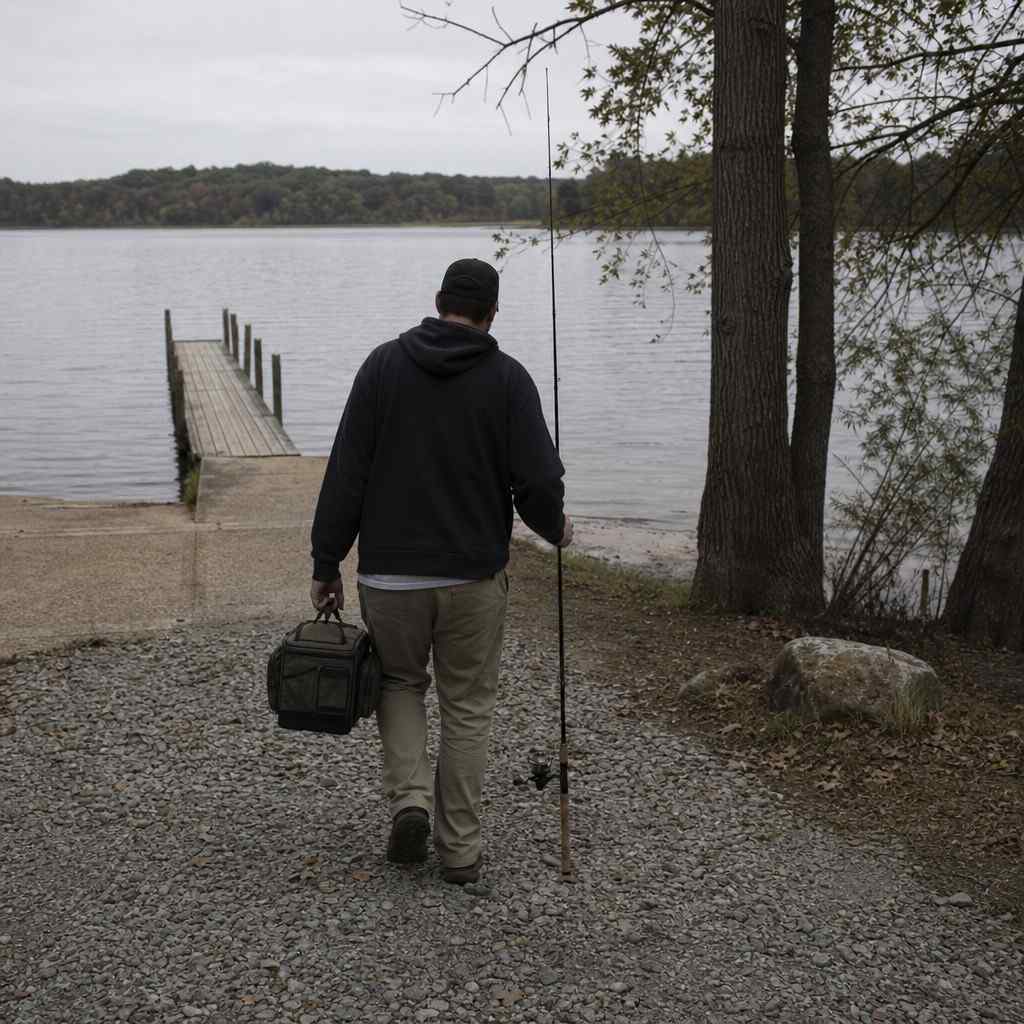
Most adults do need a license to fish public water in the US. But you do not get it from the federal government.
Fishing licenses are issued by individual states, not by a national agency. According to NOAA Fisheries, if you are fishing in state waters (generally the zone from shore out to about three nautical miles) you contact your state fish and wildlife agency for a recreational license. No single permit covers all fifty states at once.
That is why a license bought in one state does not travel with you. Cross a state line to fish, and you are usually under a new agency’s rules.
Fifty states means fifty licensing systems, and only the one whose water you are standing in counts on any given day.
So the real first step is not “buy a fishing license.” It is “find out what my state requires,” because your state sets the price, the age rules, and the exemptions.
Still working out gear and where to go? The start-here guide to catching your first fish covers that side. This one covers the paperwork.
Why It Works This Way
The reason is structural.
States, not the federal government, manage most inland fish and wildlife. Each state runs its own agency, sets its own regulations, and uses license money to fund stocking, habitat work, and enforcement inside its borders.
So fifty states means fifty systems. The price, the one-day option, the age you age out of free fishing: all decided at the state level.
You only need to satisfy the rules of the state whose water you are standing in or on. Find that one agency, and you have found your single source of truth.
Who Usually Does Not Need a License
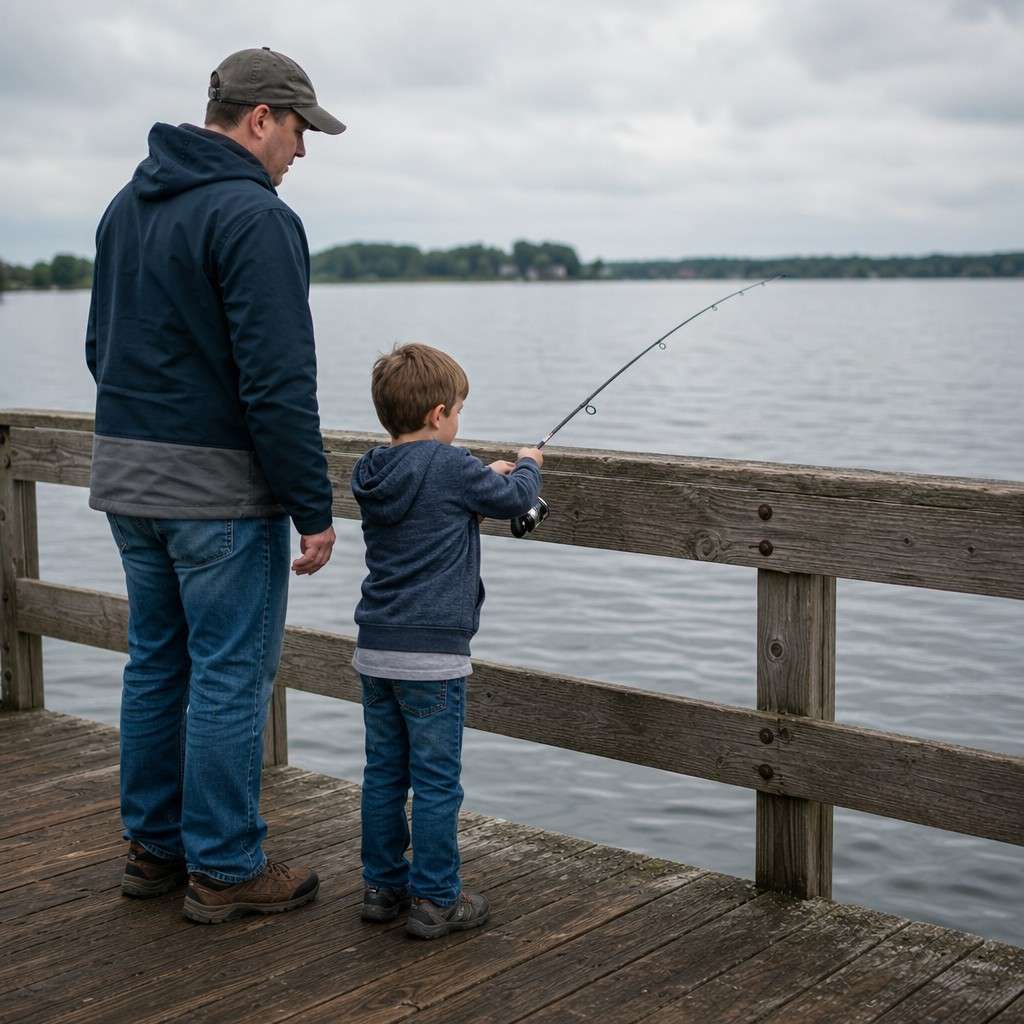
Read this before you pay for anything, because you may not have to. The exact rules vary by state, but a few exemptions show up almost everywhere.
Children under a certain age usually fish free. The cutoff is set by each state, so it is not the same number everywhere. In California, for example, the state’s Department of Fish and Wildlife does not require a sport fishing license for anyone under 16. Other states set their own thresholds, which is why you confirm yours rather than assume.
A few other common exemptions, each of which varies by state:
- Free fishing days. Many states set aside specific days each year when no license is required. California lists fishing on a designated free fishing day among the cases where no license is needed.
- Public pier fishing. Some states waive the license on certain public piers. California explicitly does this for public pier fishing in ocean waters.
- Seniors and certain residents. Reduced-fee or no-fee licenses for older residents, low-income residents, or disabled veterans exist in many states, but the qualifying ages and conditions differ widely.
The pattern is consistent even though the numbers are not. Assume an exemption might apply to you, then confirm the specifics with your own state agency. Guessing the age or the day wrong is the easy mistake here.
Freshwater and Saltwater Can Be Two Different Things
Here is a wrinkle that surprises a lot of newcomers. In some states, your freshwater license does not automatically cover the ocean.
Many states require a separate saltwater license, or treat it as an add-on to a freshwater one. A pond-and-river license may not be valid the moment you fish the surf or a saltwater pier. Some states bundle the two; some sell them separately, and your state agency’s license page will say which.
There is also a federal layer in saltwater, and it is smaller than it sounds.
A saltwater license or registration from almost any state automatically registers you in NOAA’s National Saltwater Angler Registry, so you do not need to do anything extra. According to NOAA Fisheries, since January 1, 2011, a state saltwater license or registration counts as that registration, with a few territory exceptions. If your state has no such license, you register directly through NOAA instead.
In plain terms: get your state’s saltwater license, and the federal registry usually takes care of itself.
Bag Limits, Sizes, and Seasons Vary Too
A license is permission to fish. It is not permission to keep whatever you catch.
Size limits, bag limits, and open seasons are set per species and per state, often per body of water. They tell you how many of a fish you may keep in a day, how big it has to be, and when the season is open. These rules protect the fishery so there are fish there next year.
They also change most often, because agencies adjust them as fish populations shift. The same species can carry a different limit in a neighboring state, or even on a different lake.
You do not have to memorize any of it. Your state agency publishes a current regulations summary, and that document settles every size, bag, and season question. Reading it for the species you are likely to catch takes a couple of minutes and saves a fine.
How to Actually Buy One in a Few Minutes
After all those variables, getting legal is fast and cheap.
Almost every state sells fishing licenses online through its fish and wildlife agency website, in a few minutes. You pick the license type and pay, and in many states you can carry a digital license on your phone or print it.
A sequence that works in most states:
- Search for your state’s fish and wildlife agency by name (the name varies, for example California’s Department of Fish and Wildlife or Texas Parks and Wildlife). Use the official state site, not a third-party reseller.
- Pick the license that fits the trip. California, for instance, offers one-day and two-day sport fishing licenses alongside the resident annual license, so a single trip does not force you into a full year.
- Check freshwater versus saltwater before you pay, so the license covers the water you plan to fish.
- Note the age and free-day exemptions in case you, or a child with you, do not need to pay at all.
For broad beginner orientation, the Recreational Boating and Fishing Foundation runs Take Me Fishing, a plain-language overview of state licensing aimed at first-timers. It is a useful map, but the binding rules always live on your own state agency’s page.
Treat your state agency’s website as the source of truth, not anything you read second-hand. Rules genuinely change, and an out-of-date number from a blog (this one included) is worth nothing next to the current page from the agency that wrote the rule.
That is the whole system: no national license, fifty state ones, a handful of common exemptions, a saltwater wrinkle, and a few-minute online purchase. Once that box is ticked, the more interesting question is where the fish actually are, which comes down to learning how to read the water.