
Ask why early mornings out-fish bright afternoons and you usually hear “that’s just when they bite.” True, but not useful.
Fish feed hardest at dawn, dusk, and during changing conditions, and the reasons are physical, not lucky. Light, temperature, and oxygen all swing during those windows, and they swing in the fish’s favor. Understand the why and you can time a trip instead of guessing.
Why First and Last Light Switch On the Bite
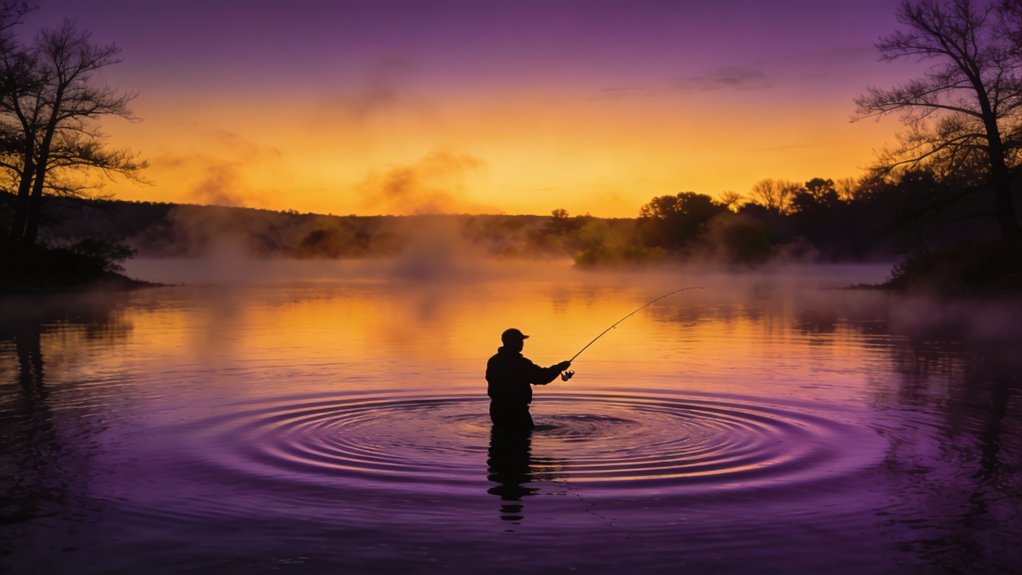
The simplest reason is light, and it works in the predator’s favor.
Low light tips the odds toward the hunter. In dim conditions, predatory fish can see prey well enough to attack, while baitfish lose the clear view that lets them flee in time. That ambush advantage is why bass, walleye, and other predators move shallow to feed at dawn and dusk instead of midday.
- The hour after sunrise is the most reliable window of the day.
- The hour before dark runs a close second, often a touch longer.
- An overcast day stretches that low-light edge across the afternoon.
None of this needs special gear. It needs you at the water during the right hour, which is the cheapest upgrade in fishing.
Temperature and a Fish’s Metabolism
Light explains the timing. Temperature explains the intensity.
Fish are cold-blooded, so the water sets their metabolism. How much they eat tracks how warm the water is. In cold water their metabolism slows and they feed less and slower; in comfortable water they burn energy and hunt actively. That is the engine under the dawn and dusk pattern, since early and late the water sits in a kinder range than the heat of the day.
It also explains seasons in one line:
- Spring and fall, with mild water, often give long, generous low-light windows.
- Summer pushes the best fishing to the cool edges of the day, early and late.
- Winter slows everything, so the bite shifts to the warmest part of a cold day rather than the coldest dawn.
The Oxygen Wrinkle in Warm Water
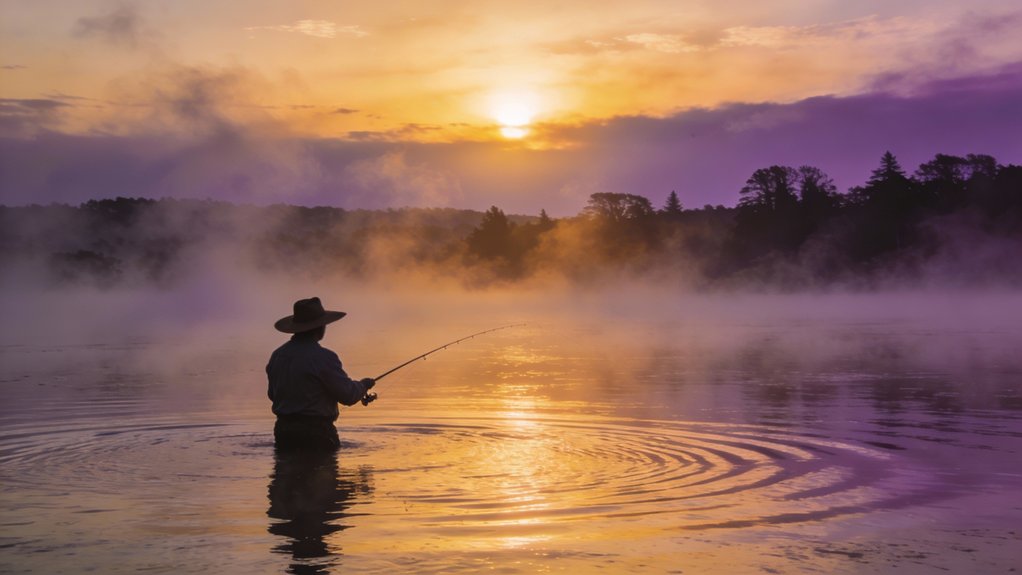
Heat carries a second effect that catches people out.
Warm water holds less dissolved oxygen than cool water. According to USGS water-science data, oxygen dissolves more readily into cold water, so a cool morning holds more breathable oxygen than a hot afternoon. In the heat of summer, surface oxygen can drop enough to push fish deeper or off the bite during the hottest hours, then the same fish feed freely again on the next cool morning.
So a dawn trip wins twice in summer: better light and better oxygen at the same hour.
Changing Conditions, Not Just Time of Day
Dawn and dusk are the dependable windows, but a shift in conditions can switch on the bite at any hour.
A change in the weather often triggers a short feeding burst. Fish read the same signals you can learn to read, and several of them open a window:
- A breeze. Light wind breaks the surface, hides your line, and pushes food toward a windblown bank.
- The hours before a front. Falling pressure ahead of a weather change can spark an aggressive feed before it arrives.
- A cloud bank rolling in. Sudden low light mimics the dawn and dusk advantage in the middle of the day.
The flip side is real too. Heavy rain clouding the water, high wind wrecking your bait presentation, or a cold front parking a bright, still sky overhead will all flatten a bite that should have fired. When the window closes, the checklist for what to do when your best fishing hours can turn completely dead covers the rest.
The right hour over empty water still catches nothing, so it is worth pairing this with how to read the water and find fish.
How to Time Your Trip
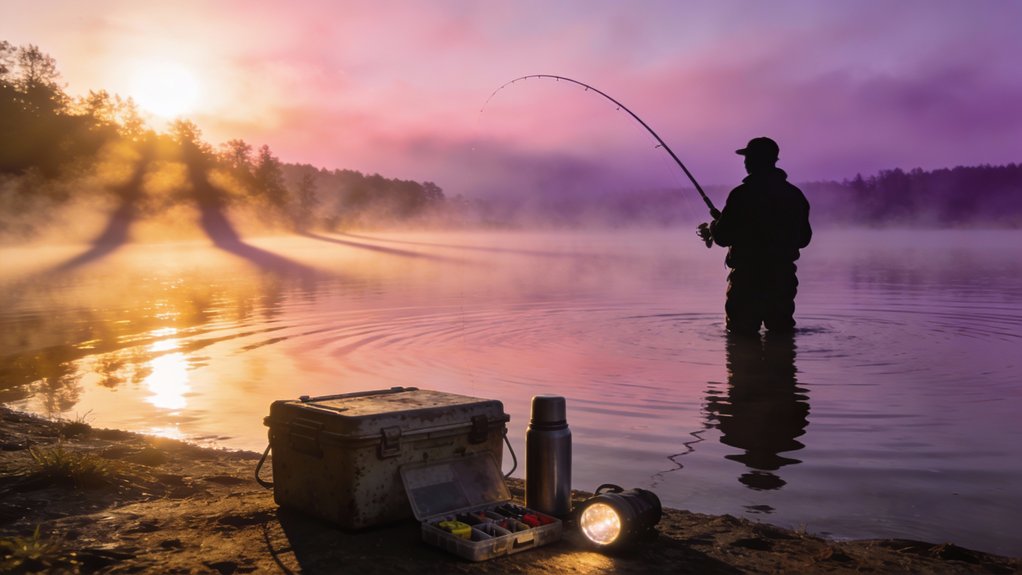
You do not need an app or a chart. A few habits cover most of it.
- Default to first or last light. If you only get one window, take the hour after sunrise or the hour before dark.
- Read the day. Overcast, breezy, or just-before-a-front beats bright, hot, and still.
- Match the season. Fish the cool edges in summer, the warm middle in winter, the long low-light windows in spring and fall.
- Watch the water for clues. Splashes, surface ripples, and diving birds mark feeding fish, so pay attention to the environment and fish where the activity is.
Timing is the one lever that costs nothing and out-fishes any tackle upgrade. If you are still sorting out gear and the first forgiving rig, the start-here guide to catching your first fish covers that side.
A blank afternoon is rarely bad luck. More often it is the wrong hour over the right water. Move the trip to first or last light, watch for a shift in conditions, and the fish were feeding the whole time.